Air Fryer Shrimp
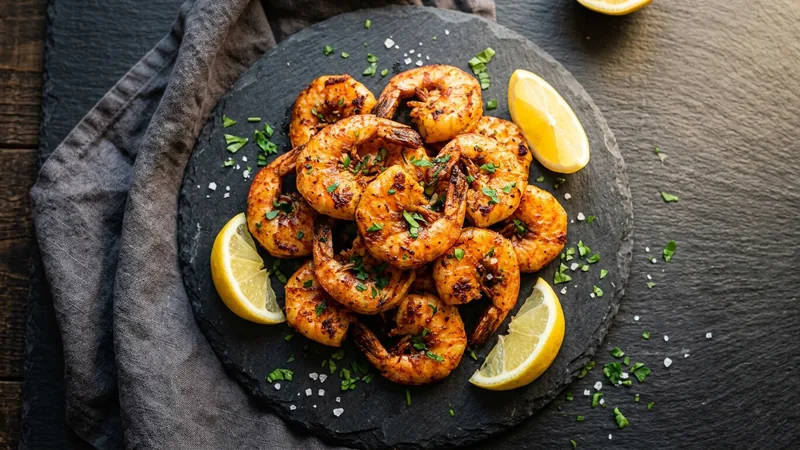
Large shrimp at 400°F for 6 to 8 minutes, shaken once, come out plump and lightly charred with a garlic-paprika crust. The whole thing takes less time than boiling the water for pasta to serve them over.
Shrimp at a glance
Ingredients
- 1 lb large raw shrimp (26/30 or 21/25 count), peeled and deveined, tails on or off
- 1 tbsp olive oil
- 1/2 tsp kosher salt
- 1/2 tsp garlic powder
- 1/2 tsp smoked paprika
- 1/4 tsp black pepper
- Lemon wedges and chopped parsley, to serve
Steps
- Thaw and dry completely. Frozen shrimp thaw in 5 to 10 minutes under cold running water in a colander. Then pat them dry with paper towels until nothing glistens; surface water is the difference between a sear and a steam.
- Toss with oil and spices. Oil first so the seasoning sticks, then salt, garlic powder, smoked paprika and pepper. Do this in a bowl, not in the basket.
- Preheat 400°F for 3 minutes, then single layer for 3 to 4 minutes. A hot basket starts browning the shrimp on contact. Spread them out; a little overlap at the edges is fine, a pile is not.
- Shake, then 3 to 4 minutes more. Pull the basket and shake it hard, or flip with tongs if your fryer is a tray model. Large shrimp typically finish at 6 to 8 minutes total, based on manufacturer guidance and widely reported results. Done is pink, opaque and curled into a loose C, and 145°F on a thermometer.
- Lemon, parsley, serve now. Shrimp keep cooking in their own heat for a minute after they leave the basket, so plate them straight away.
Why it works
Shrimp are small and lean, which means they have a narrow window between raw and rubbery. The protein sets around 120°F and starts squeezing out moisture aggressively past 145°F, so the goal is to get the surface browned before the inside crosses that line. High heat and short time do it: 400°F with a preheated basket sears the outside in the first two minutes, and the shrimp are through in six to eight. A lower temperature would take long enough that the centers overshoot while the surface stays pale.
The dry surface and the thin coat of oil matter just as much. Water on the shrimp has to boil off before any browning starts, and it cools the basket while it does. Oil carries the spices, conducts heat into the surface and helps the paprika toast into a light crust instead of scorching.
Times by shrimp size
Shrimp are sold by count per pound, and that number sets the cook time more than anything else. All times are at 400°F, preheated, single layer, thawed and dried, with one shake at the halfway mark. Fryers vary by 25°F or more, so check a shrimp at the low end of the range the first time.
| Size (count per lb) | Time at 400°F | Notes |
|---|---|---|
| Medium (41/50) | 4–6 min | Easy to overcook; shake at 2 minutes |
| Large (26/30 or 21/25) | 6–8 min | The sweet spot for this recipe |
| Jumbo (16/20) | 8–10 min | Best for skewers and tails-on presentation |
| Large, from frozen | 8–10 min | Season at the halfway shake once the ice is gone |
Doneness is 145°F, or pearly and opaque. USDA FSIS and FoodSafety.gov list 145°F as the safe minimum internal temperature for fish and shellfish, and describe done shrimp as flesh that has turned firm, pearly and opaque. A shrimp is thin enough that an instant-read probe is fiddly, so the visual test is the one most cooks use: grey and glassy is raw, pink and opaque is done, and the curl tells you the rest. A loose C is right; a tight O has gone a minute too far.
Variations
Straight from frozen. No thaw, no problem. Put the frozen shrimp in the preheated basket at 400°F for 4 minutes, shake, then toss with the oil and seasonings once the ice glaze has melted so they actually coat, and cook 4 to 6 minutes more. KitchenAid's guidance follows the same logic: seasonings will not stick to frozen shrimp, so add them partway through.
Garlic butter. Cook the shrimp as written, then toss them in a bowl with 2 tablespoons of melted butter, a minced garlic clove and a squeeze of lemon while still hot. Adding the butter after, not before, keeps the milk solids from burning in the basket.
Cajun or bang bang. Swap the paprika and garlic for 2 teaspoons of Cajun seasoning and skip the salt. For bang bang, toss the cooked shrimp in a mix of 3 tablespoons mayonnaise, 2 tablespoons sweet chili sauce and a teaspoon of sriracha.
What goes wrong
Rubbery. Overcooked, usually by only a minute. Use large shrimp, pull at the first sign of opaque, and check early with a crowded basket.
Pale and wet. Shrimp went in damp, or the basket was not preheated. Dry harder, preheat longer.
Seasoning fell off. No oil, or shrimp were still icy. Oil first, then spices, and only on thawed shrimp.
Leftovers. Refrigerate within 2 hours. Cooked shrimp reheat poorly in the air fryer and tighten up; eat them cold in a salad or tossed into hot pasta at the last second.
Quick answers
Can I cook frozen shrimp in the air fryer without thawing?
Yes. Put the frozen shrimp straight in the basket at 400°F for 4 minutes, shake, then toss with the oil and seasonings once the ice has melted so they actually stick, and cook 4 to 6 minutes more. Expect 8 to 10 minutes total for large shrimp and a little less char than thawed.
How do I know when air fryer shrimp are done?
The flesh turns from grey and translucent to pink and opaque, and each shrimp curls into a loose C shape. A tight O means overcooked. On a thermometer, USDA and FoodSafety.gov put seafood at 145°F, though shrimp are thin enough that the color and curl are the practical test.
Why are my air fryer shrimp rubbery?
Almost always overcooking, which happens fast with small shrimp or a full basket left an extra minute. Use large shrimp, pull them the moment they turn opaque, and check at the low end of the time range the first time. Wet shrimp also steam instead of sear, so dry them well.